Благие намерения, согласно эффекту Люцифера, стали топливом для задания вектора, выгодного создателям и манипуляторам государственного переворота.
Good intentions, according to Lucifer's effect, became fuel for a task of a vector favorable to founders and manipulators of revolution.
Good intentions , according to the effect of Lucifer , became fuel for the task vector , profitable for creators and manipulators coup .
Friday, January 8, 2016


ScienceDaily: Strange Science News
ScienceDaily: Strange Science News |
- Pathogens found in Ice Man's stomach
- Coffee flour offers a potentially healthier way of enjoying java
- In Arctic winter, marine creatures migrate by the light of the moon
- Bug eyes: Tiny 3D glasses confirm insect 3D vision
- Love hertz
- Momentum builds for creation of 'moon villages'
- Leopard sharks navigate with their nose
- Skin bacteria help cancer cells grow
| Pathogens found in Ice Man's stomach Posted: 07 Jan 2016 12:17 PM PST Scientists are continually unearthing new facts about Homo sapiens from the mummified remains of Otzi, the Copper Age man, who was discovered in a glacier in 1991. Researchers have now succeeded in demonstrating the presence of Helicobacter pylori in Otzi's stomach contents, a bacterium found in half of all humans today. |
| Coffee flour offers a potentially healthier way of enjoying java Posted: 07 Jan 2016 11:06 AM PST Scientists are developing the flour milled from a new invention -- parbaked coffee beans -- both as a food ingredient and a nutritional supplement. |
| In Arctic winter, marine creatures migrate by the light of the moon Posted: 07 Jan 2016 11:04 AM PST A few months ago, researchers reported the surprising discovery that marine creatures living in one Arctic fjord keep busy through the permanently dark and frigid winter months. Now, a report extends this activity to the whole of the Arctic. They also find that, in the absence of any sunlight, it's the moon that drives the vertical migrations of tiny marine animals. |
| Bug eyes: Tiny 3D glasses confirm insect 3D vision Posted: 07 Jan 2016 09:39 AM PST Miniature glasses have proved that mantises use 3-D vision, providing a new model to improve visual perception in robots. 3D vision in mantises was originally shown in the 1980s but this work used prisms and occluders which meant that only a very limited set of images could be shown. The new research team has developed 3D glasses suitable for insects which means they can show the insects any images they want, opening up new avenues of research. |
| Posted: 07 Jan 2016 06:44 AM PST Sex sells when it comes to luring male mosquitoes, a new study has found. Researchers set out to make a cheap and effective audio lure for scientists collecting male Aedes aegypti mosquitoes -- the species that carries dengue and yellow fever. They found a tone of precisely 484 Hertz, the frequency of a female Aedes aegypti's wings, brought 95 percent of male mosquitoes to the trap. |
| Momentum builds for creation of 'moon villages' Posted: 06 Jan 2016 07:02 PM PST Villages on the moon, constructed through cooperation between astronauts and robotic systems on the lunar surface, could become a reality as early as 2030. That's the consensus of a recent international conference of scientists, engineers and industry experts. |
| Leopard sharks navigate with their nose Posted: 06 Jan 2016 06:37 PM PST Olfaction may contribute to shark ocean navigation, likely based on their ability to sense chemical changes in the water as they swim, according to a new study. |
| Skin bacteria help cancer cells grow Posted: 06 Jan 2016 06:17 AM PST Our skin is covered in millions of bacteria and most of them help keep us healthy. However, for patients with lymphoma, it may be a rather different story, as new research shows that toxins in the staphylococcus bacteria help cancer cells gain control over healthy cells. |
| You are subscribed to email updates from Strange & Offbeat News -- ScienceDaily. To stop receiving these emails, you may unsubscribe now. | Email delivery powered by Google |
| Google Inc., 1600 Amphitheatre Parkway, Mountain View, CA 94043, United States | |
Thursday, January 7, 2016
ScienceDaily: Strange Science News
ScienceDaily: Strange Science News |
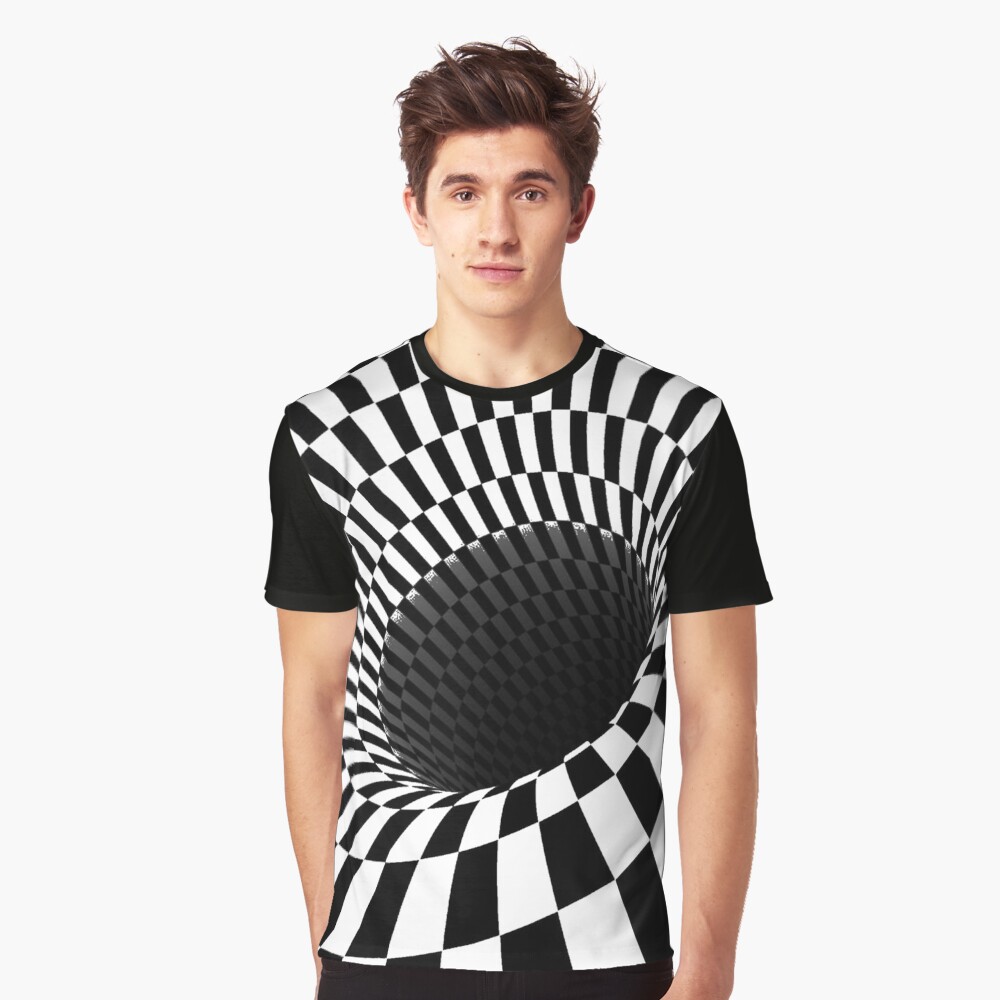
- 'Seeing' black holes with the naked eye
- Generous mothers are nagged less
- Leaf-mimicking device harnesses light to purify water
- Fish-flavored cat food could contribute to feline hyperthyroidism, study suggests
- Globular clusters could host interstellar civilizations
- Spooky interference at a distance
- Thor's hammer to crush materials at 1 million atmospheres
- Some consumers use ‘servant’ brands to gain sense of power, study finds
| 'Seeing' black holes with the naked eye Posted: 06 Jan 2016 11:30 AM PST All you need is a 20 cm telescope to observe a nearby, active black hole. An international research team reports that the activity of black holes can be observed as visible light during outbursts, and that flickering light emerging from gases surrounding black holes is a direct indicator of this. New results indicate that optical rays and not just X-rays provide reliable observational data for black hole activity. |
| Generous mothers are nagged less Posted: 06 Jan 2016 09:50 AM PST For the first time, scientists have identified specific genetic variations in offspring that lead to preferential maternal treatment, which in turn improves offspring fitness. |
| Leaf-mimicking device harnesses light to purify water Posted: 06 Jan 2016 08:07 AM PST For years, scientists have been pursuing ways to imitate a leaf's photosynthetic power to make hydrogen fuel from water and sunlight. In a new twist, a team has come up with another kind of device that mimics two of a leaf's processes -- photosynthesis and transpiration -- to harness solar energy to purify water. Their development could help address issues of water scarcity. |
| Fish-flavored cat food could contribute to feline hyperthyroidism, study suggests Posted: 06 Jan 2016 08:07 AM PST Over the past three decades, the number of cats diagnosed with hyperthyroidism has increased. According to research reports, many factors such as exposure to flame retardants could be responsible, and now a new study points in another direction. It suggests that fish-flavored cat food could be among the culprits. |
| Globular clusters could host interstellar civilizations Posted: 06 Jan 2016 08:06 AM PST Globular star clusters are extraordinary in almost every way. They're densely packed, holding a million stars in a ball only about 100 light-years across on average. They're old, dating back almost to the birth of the Milky Way. And according to new research, they also could be extraordinarily good places to look for space-faring civilizations. |
| Spooky interference at a distance Posted: 06 Jan 2016 06:15 AM PST Nanotechnologists have discovered a new fundamental property of electrical currents in very small metal circuits. They show how electrons can spread out over the circuit like waves and cause interference effects at places where no electrical current is driven. |
| Thor's hammer to crush materials at 1 million atmospheres Posted: 05 Jan 2016 12:09 PM PST Thor, expected to be 40 times more efficient than Sandia's Z machine, the world's largest and most powerful pulsed-power accelerator, is expected to dramatically improve the design of similar machines aiming for high-yield fusion. |
| Some consumers use ‘servant’ brands to gain sense of power, study finds Posted: 05 Jan 2016 07:22 AM PST A recent study states that some consumers -- materialists who strongly link possessions to happiness and who tend to have poor personal relationships -- regard anthropomorphized popular products as servants over which they can assert power and gain control that they otherwise lack in their lives. |
| You are subscribed to email updates from Strange & Offbeat News -- ScienceDaily. To stop receiving these emails, you may unsubscribe now. | Email delivery powered by Google |
| Google Inc., 1600 Amphitheatre Parkway, Mountain View, CA 94043, United States | |
Wednesday, January 6, 2016
ScienceDaily: Strange Science News
ScienceDaily: Strange Science News |
- Runaway stars leave infrared waves in space
- Mosquitoes more likely to lay eggs in water sources near flowers
- Bacteria, electrons spin in similar patterns
- Zombified caterpillars forced to carb-load by parasitoid wasps
- More environmentally-friendly concrete made using sugar cane residue
- Tiniest chameleons deliver most powerful tongue-lashings
| Runaway stars leave infrared waves in space Posted: 05 Jan 2016 01:08 PM PST Astronomers are finding dozens of the fastest stars in our galaxy. When some speedy, massive stars plow through space, they can cause material to stack up in front of them in the same way that water piles up ahead of a ship. Called bow shocks, these dramatic, arc-shaped features in space are leading researchers to uncover massive, so-called runaway stars. |
| Mosquitoes more likely to lay eggs in water sources near flowers Posted: 05 Jan 2016 12:09 PM PST Certain mosquitoes are more likely to lay eggs in water sources near flowers than in water sources without flowers, according to a new article. |
| Bacteria, electrons spin in similar patterns Posted: 05 Jan 2016 10:31 AM PST Scientists have identified an unexpected shared pattern in the collective movement of bacteria and electrons: As billions of bacteria stream through a microfluidic lattice, they synchronize and swim in patterns similar to those of electrons orbiting around atomic nuclei in a magnetic material. |
| Zombified caterpillars forced to carb-load by parasitoid wasps Posted: 05 Jan 2016 07:23 AM PST Parasitoid wasps manipulate their caterpillar hosts into eating a more wasp-friendly diet, report investigators. It turns out that when caterpillars eat more carbs, the wasp larvae that chew their way out of the caterpillar's carcass are bigger, explain the scientists. |
| More environmentally-friendly concrete made using sugar cane residue Posted: 04 Jan 2016 05:08 AM PST A new type of concrete has been developed that is cheaper and much less polluting to the environment. Researchers have swapped in sugar cane straw ash, a crop residue typically discarded as waste, as a substitute for Portland cement. |
| Tiniest chameleons deliver most powerful tongue-lashings Posted: 04 Jan 2016 05:00 AM PST A new study reports one of the most explosive movements in the animal kingdom: the mighty tongue acceleration of a chameleon just a couple of inches long. The research illustrates that to observe some of nature's best performances, scientists sometimes have to look at its littlest species. |
| You are subscribed to email updates from Strange & Offbeat News -- ScienceDaily. To stop receiving these emails, you may unsubscribe now. | Email delivery powered by Google |
| Google Inc., 1600 Amphitheatre Parkway, Mountain View, CA 94043, United States | |
Tuesday, January 5, 2016
ScienceDaily: Strange Science News
ScienceDaily: Strange Science News |
- Virgin births may be common among snakes
- The brain-computer duel: Do we have free will?
- Beneficial self-harming: Sea slugs protect themselves by self-cutting
- Social behavior in carpenter ants reprogrammed using epigenetic drugs
| Virgin births may be common among snakes Posted: 04 Jan 2016 10:12 AM PST A new review provides intriguing insights on parthenogenesis, or virgin birth, in snakes. |
| The brain-computer duel: Do we have free will? Posted: 04 Jan 2016 10:08 AM PST Our choices seem to be freer than previously thought. Using computer-based brain experiments, researchers studied the decision-making processes involved in voluntary movements. The question was: Is it possible for people to cancel a movement once the brain has started preparing it? The conclusion the researchers reached was: Yes, up to a certain point -- the 'point of no return'. |
| Beneficial self-harming: Sea slugs protect themselves by self-cutting Posted: 04 Jan 2016 05:14 AM PST New research zeroes in on how the hooded sea slug safely loses limbs. Melibe leonina is a species of nudibranch, a marine snail that has no shell; it was the focus of this recent research. |
| Social behavior in carpenter ants reprogrammed using epigenetic drugs Posted: 04 Jan 2016 05:00 AM PST In Florida carpenter ant colonies, distinct worker castes called minors and majors exhibit pronounced differences in social behavior throughout their lives. In a new study, a multi-institution team found that these caste-specific behaviors are not set in stone. Rather, this pioneering study shows that social behavior can be reprogrammed, indicating that an individual's epigenetic, not genetic, makeup determines behavior in ant colonies. |
| You are subscribed to email updates from Strange & Offbeat News -- ScienceDaily. To stop receiving these emails, you may unsubscribe now. | Email delivery powered by Google |
| Google Inc., 1600 Amphitheatre Parkway, Mountain View, CA 94043, United States | |
Monday, January 4, 2016
ScienceDaily: Strange Science News
ScienceDaily: Strange Science News |
- 'Forbidden' substances on super-Earths
- Teenager infected with rat-bite fever from her pet rodent
- How temperature determines sex in alligators
- Chinese rover analyzes moon rocks: First new ‘ground truth’ in 40 years
| 'Forbidden' substances on super-Earths Posted: 25 Dec 2015 11:16 AM PST Using mathematical models, scientists have 'looked' into the interior of super-Earths and discovered that they may contain compounds that are forbidden by the classical rules of chemistry -- these substances may increase the heat transfer rate and strengthen the magnetic field on these planets. |
| Teenager infected with rat-bite fever from her pet rodent Posted: 23 Dec 2015 11:11 AM PST A 17-year-old woman was infected with the rare, but treatable rat-bite fever, that developed from pet rodents that lived in her bedroom, report the doctors who treated her. |
| How temperature determines sex in alligators Posted: 23 Dec 2015 10:41 AM PST Some reptiles such as crocodilians and some turtles are known to display temperature-dependent sex determination (TSD), where the ambient temperature of the developing eggs determines the individual's sex. An international joint research team has determined that the thermosensor protein TRPV4 is associated with TSD in the American alligator. |
| Chinese rover analyzes moon rocks: First new ‘ground truth’ in 40 years Posted: 22 Dec 2015 08:37 AM PST The Moon was never a fully homogenized body like Earth, analysis of Moon rocks made by the Chinese rover, Yutu, suggests. The basalts the rover examined are a new type, chemically different from those retrieved by the Apollo and Luna missions 40 years ago. |
| You are subscribed to email updates from Strange & Offbeat News -- ScienceDaily. To stop receiving these emails, you may unsubscribe now. | Email delivery powered by Google |
| Google Inc., 1600 Amphitheatre Parkway, Mountain View, CA 94043, United States | |
Subscribe to:
Posts (Atom)
znamenski.redbubble.com
⚕ Scientific Prints 🔬
Browse our selection of scientific prints to find the very best unique arts or images helpful for your educational and scientific activity
Get my art printed on awesome products.
Support me at Redbubble: znamenski.redbubble.com
Get my art printed on awesome products.
Support me at Redbubble: znamenski.redbubble.com




























































































































Get my art printed on awesome products.
Support me at Redbubble: znamenski.redbubble.com
Get my art printed on awesome products.
Support me at Redbubble: znamenski.redbubble.com
Enjoy vintage art printed on awesome products at Redbubble
